

Secondhand (Online) Shopping
How and why I shop the way I do

My shopping habits have evolved a lot over the years. When I first started building a personal style, affordability was my biggest priority. I was young, still a student, and had a strong urge to explore fashion, with a small budget to make it happen.
These days, my habits have shifted. With a bit more spending power and a busier schedule, convenience has become a bigger factor and that’s led me to shop online much more than I used to. That being said, shopping secondhand is still my preference. Here’s a breakdown of how I used to shop, what’s changed, and how I approach shopping today.

IRL Thrifting
When I was younger, in-person thrifting was the only way I shopped. I loved spending hours sifting through endless racks, and it was one of the few ways I could afford to experiment with different styles and brands without contributing to waste and fast fashion.
Back then, I lived in Los Angeles, where, in my opinion, the thrift scene is more affordable, abundant, and not completely picked over. My go-to spots were Goodwill, Crossroads, Out of the Closet, flea markets, and a few vintage shops local to Silver Lake (where I grew up)—p.s. I love you, Squaresville.
Now that I live in New York, my relationship with thrifting has changed. To be blunt: the thrifting scene here kind of sucks. There are plenty of vintage stores, but most are overpriced and heavily picked through. The Goodwill, Crossroads, and Out of the Closet locations that do exist are smaller and ran through. It just doesn’t hit the same.
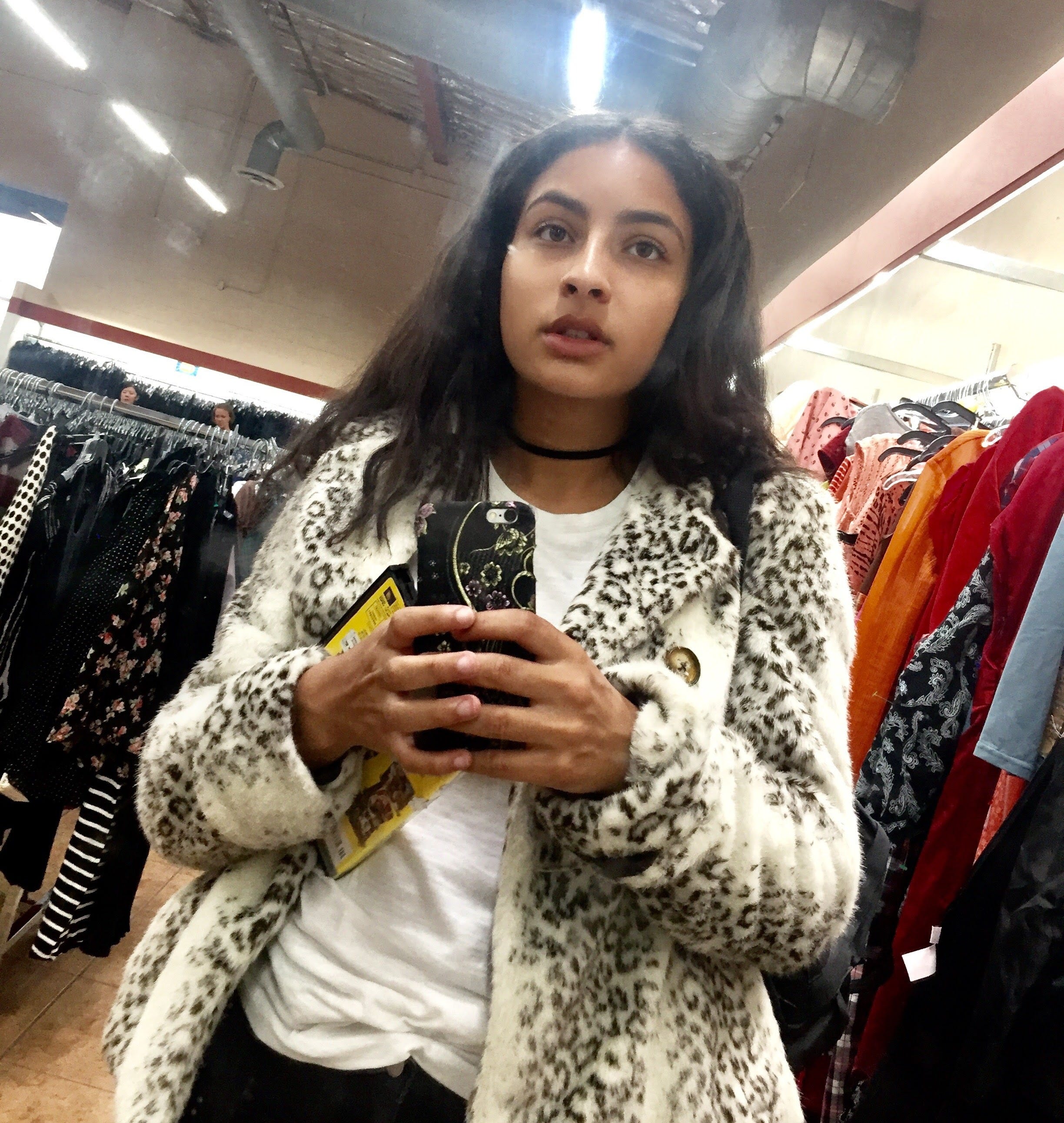
There are a few decent options in Brooklyn—L Train Vintage and Other People’s Clothes are two I visit from time to time—but they have limitations. The closest thing I’ve found to a traditional thrift experience in NYC is MyUnique, which has larger warehouse-style locations in the Bronx and Queens. But unless you live nearby, those trips require planning and time I rarely have.
So while thrifting IRL will always hold a nostalgic place in my heart, it’s no longer my default shopping method. I still love a good in-person hunt, but these days, I’m a bit more strategic about when, where, and how I do it.
Online Shopping (Secondhand)
So, how do I typically shop now? I haven’t abandoned my secondhand roots—I’ve just evolved the way I shop. Limited free time means I’ve gotten more intentional about how I shop to make the process more efficient and aligned with my personal style, which brings me to online.
While I occasionally use Depop and eBay when I’m looking for something specific, my two go-to resale platforms are TheRealReal and ThredUp. Here’s how I use them and what I think they’re best for:
TheRealReal
TheRealReal is my favorite place to find secondhand designer items at (relatively) accessible prices. Over the past year, I’ve tried to be more thoughtful about what I add to my wardrobe. That means investing in versatile, high-quality pieces that will last, and for me, that often means turning to designer or luxury brands.
Of course, I’m not out here dropping thousands of dollars on a bag. Buying these pieces secondhand makes it possible to access quality without blowing my budget.
That said, TheRealReal does have its quirks. The biggest downside is the algorithm. The homepage feed is rarely helpful, and I’ve found that it often just pushes the most expensive items rather than the most relevant ones. So I mostly ignore the feed and rely on the Saved Searches feature instead.
Tip: Create saved searches for your favorite brands in your size(s). It cuts through the noise and surfaces new listings that actually match what you’re looking for.
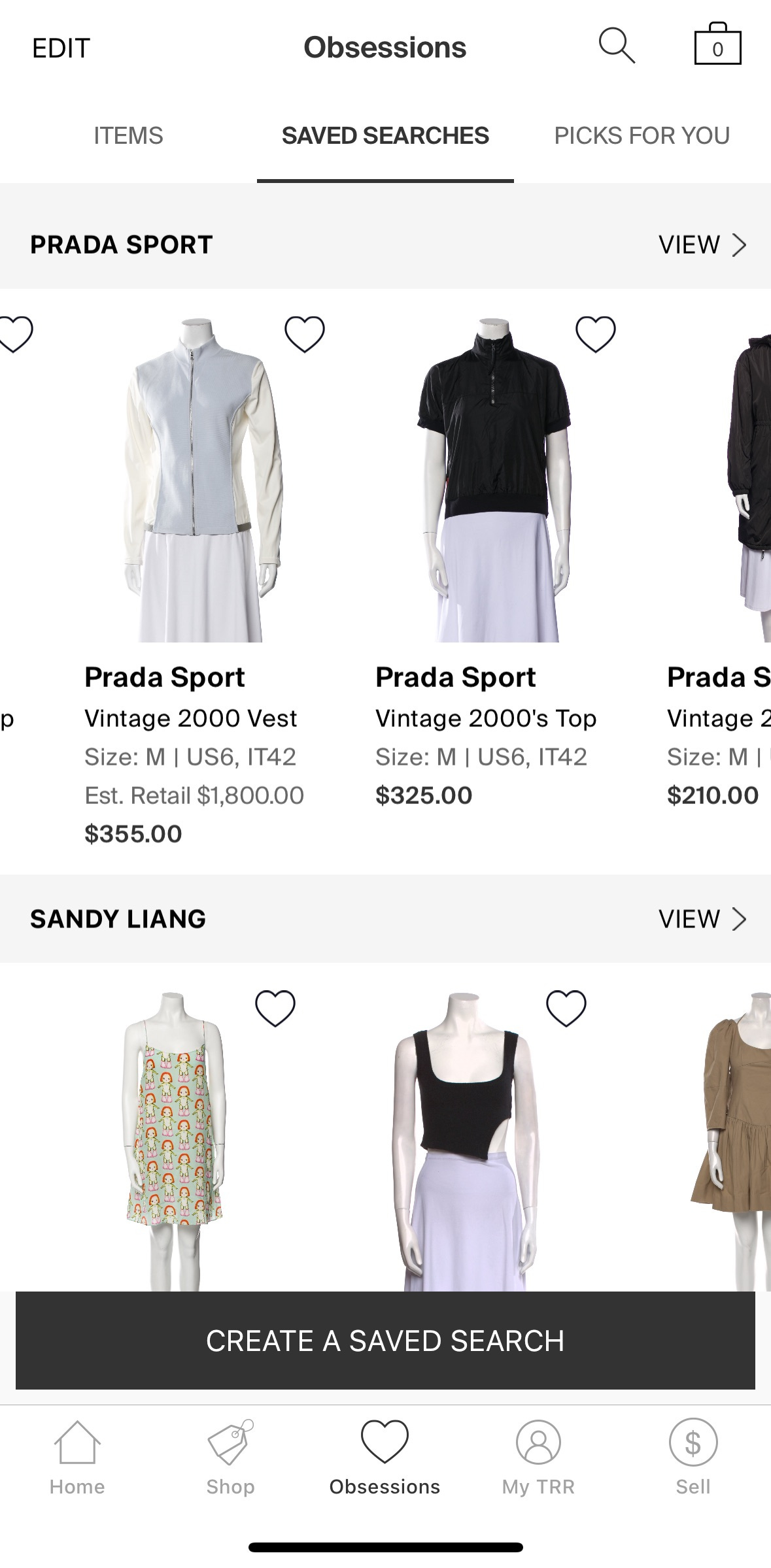
Another feature I use constantly is the Obsessions tab. If you find something you like—even if it’s out of your price range—hit the heart icon. Items are often marked down over time, and you’ll be notified when they go on sale.
Lastly, scroll to the Similar Products section at the bottom of any item page. This part of the algorithm is strong. It frequently suggests more affordable or slightly varied versions of what you're viewing. See below for a demonstration:
ThredUp
Compared to TheRealReal, I find ThredUp’s algorithm surprisingly effective. The more you use the app, the better it gets at recommending items that match your style and preferences. That said, the algorithm has short-term memory—if you don’t engage with it regularly, it quickly forgets your taste and you have to retrain it from scratch.
I’ve noticed that luxury and designer pieces on ThredUp are often priced higher than on TheRealReal, so I usually turn to it for everyday staples. It’s my go-to when I’m searching for specific closet essentials, like a solid pair of boots or well-cut slacks.
To me, ThredUp is the closest thing to in-person thrifting you can get online. The volume and variety give it that same treasure-hunt feel—and scrolling can be just as satisfying.
Tip: If you want to really mimic the thrift store experience, try searching “Assorted Brands.” It pulls in a wide mix of miscellaneous items and often surfaces some of the most unique gems on the platform.
Final Thoughts
I’ve developed a way of shopping that works for me. One that leaves me feeling proud of what I wear, where it’s from, and how I found it. Shopping secondhand has always felt personally fulfilling. It’s not just about sustainability—it helps me stay true to myself and avoid getting swept up in trend cycles.
That said, I still shop retail occasionally. I have a weakness for 260 Sample Sale’s online events (in-person sample sales stress me out), and every now and then, a well-placed Instagram ad gets the best of me.
Ultimately, I know my shopping habits will continue to evolve—just as they have over the years. Finding the right balance between convenience, values, and personal style is an ongoing process.
Also, TheRealReal's customer service is terrible; that's a reality shoppers have to be prepared for. If there's a problem with an item, you have to log in to a chatbox and repeat yourself endlessly until the actual human (who mostly uses boilerplate responses to your issues) assigned to your case *might* try to resolve it. Also, it's $15 to ship an order, and another $15 to return.